
For more than two decades, the International Space Station (ISS) has served as humanity’s permanent home in space. Orbiting hundreds of kilometers above Earth, the station is one of the greatest examples of international cooperation in history. Scientists, engineers, and astronauts from around the world live and work aboard the ISS, conducting experiments that improve life on Earth and help prepare for future missions to the Moon and Mars.
What Is the International Space Station?
The International Space Station is a large, habitable spacecraft that continuously orbits Earth. Unlike a typical satellite, the ISS is designed to support astronauts for months at a time. It functions as a laboratory, observatory, and living space where crew members perform scientific research in the unique environment of microgravity.
The ISS travels at an incredible speed of approximately 28,000 kilometers (17,500 miles) per hour, completing one orbit around Earth every 90 minutes. This means astronauts aboard the station experience about 16 sunrises and 16 sunsets every day.
What Do Astronauts Do There?
Life aboard the ISS is busy. Astronauts typically spend six months on the station performing a variety of important tasks.
Their daily activities include:
- Conducting scientific experiments
- Testing new technologies
- Maintaining and repairing station equipment
- Exercising for about two hours each day to reduce muscle and bone loss
- Communicating with students and researchers on Earth
- Capturing photographs of Earth and space
Experiments aboard the ISS have contributed to advances in medicine, materials science, agriculture, robotics, and environmental research.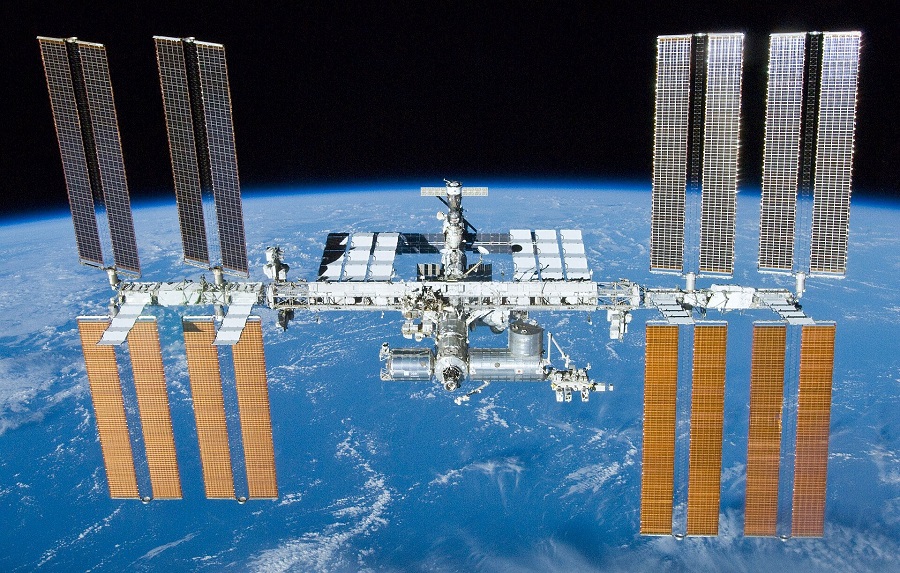
Scientific Research
The ISS is one of the world’s most advanced research laboratories.
Scientists use the station to study:
- Human health during long-duration spaceflight
- Plant growth in space
- Crystal formation for improved medicines
- Combustion without gravity
- Fluid behavior
- Earth observation and climate monitoring
- Radiation effects
Many discoveries made aboard the ISS have applications that benefit people on Earth, including improvements in healthcare and engineering.
What Will Happen to the ISS?
After decades of service, the International Space Station is expected to be retired during the next decade. Rather than remaining in orbit indefinitely, plans call for it to be safely guided back into Earth’s atmosphere, where most of it will burn up before the remaining debris falls into a remote part of the Pacific Ocean.
Meanwhile, several commercial space stations are already being developed to continue scientific research in low Earth orbit.
Spacewalks
Sometimes astronauts must leave the station to install equipment or perform repairs. These missions are called spacewalks, or Extravehicular Activities (EVAs).
During a spacewalk,
the astronauts wear specially designed spacesuits that provide:
- Oxygen
- Temperature control
- Protection from radiation
- Communication systems
- Life support
A typical spacewalk lasts between six and eight hours.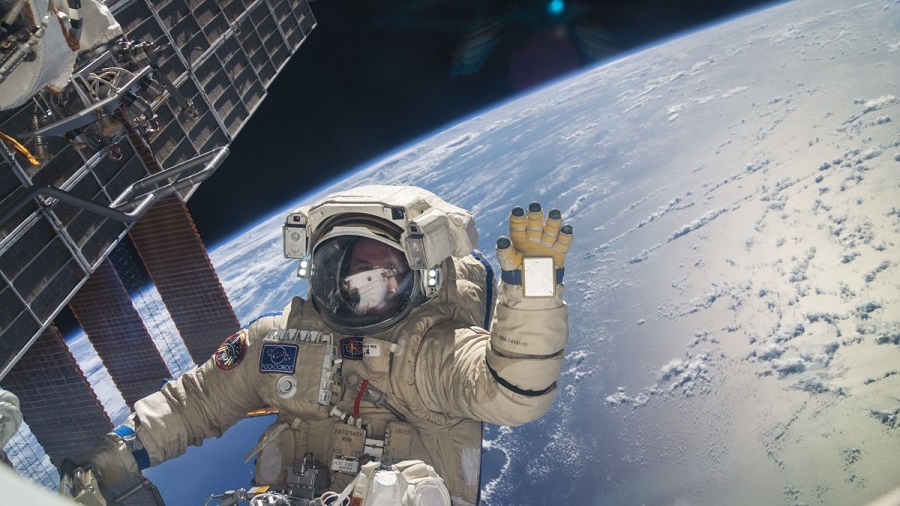
The Dutch Contribution: The European Robotic Arm (ERA)
One of the Netherlands’ greatest contributions to space exploration is the European Robotic Arm (ERA). Developed for the Russian segment of the International Space Station, the ERA is a highly advanced robotic arm that assists astronauts by moving equipment, supporting scientific experiments, and performing maintenance tasks outside the station.
The arm was primarily developed by Airbus Defence and Space Netherlands (formerly known as Dutch Space) in Leiden, working together with partners across Europe under the leadership of European Space Agency.
What Makes the ERA Special?
Unlike other robotic arms on the ISS, the European Robotic Arm is designed to “walk” across the outside of the station. It has gripping mechanisms at both ends, allowing it to release one base point, attach to another, and move itself from one location to another.
Some key facts include:
- Length: 11.3 meters (37 feet)
- Weight: Approximately 630 kilograms
- Degrees of freedom: Seven joints, providing movement similar to a human arm
- Precision: Capable of positioning objects with remarkable accuracy, even in the vacuum of space
- Lifting capacity: Can move payloads weighing up to 8,000 kilograms in the weightless environment of space.
What Does the ERA Do?
The European Robotic Arm performs a variety of important tasks, including:
- Moving scientific equipment outside the station.
- Assisting astronauts during spacewalks.
- Installing and replacing external components.
- Inspecting the station for damage.
- Supporting experiments attached to the Russian segment of the ISS.
By handling many routine tasks, the ERA reduces the amount of time astronauts need to spend performing risky spacewalks.
A Proud Dutch Achievement
The European Robotic Arm is considered one of the Netherlands’ most impressive high-tech engineering accomplishments. Its sophisticated software, precision mechanics, and autonomous capabilities demonstrate the country’s expertise in robotics and aerospace engineering.
Since becoming operational on the ISS, the ERA has played an important role in maintaining and expanding the station, helping astronauts work more safely and efficiently in one of the most challenging environments imaginable.
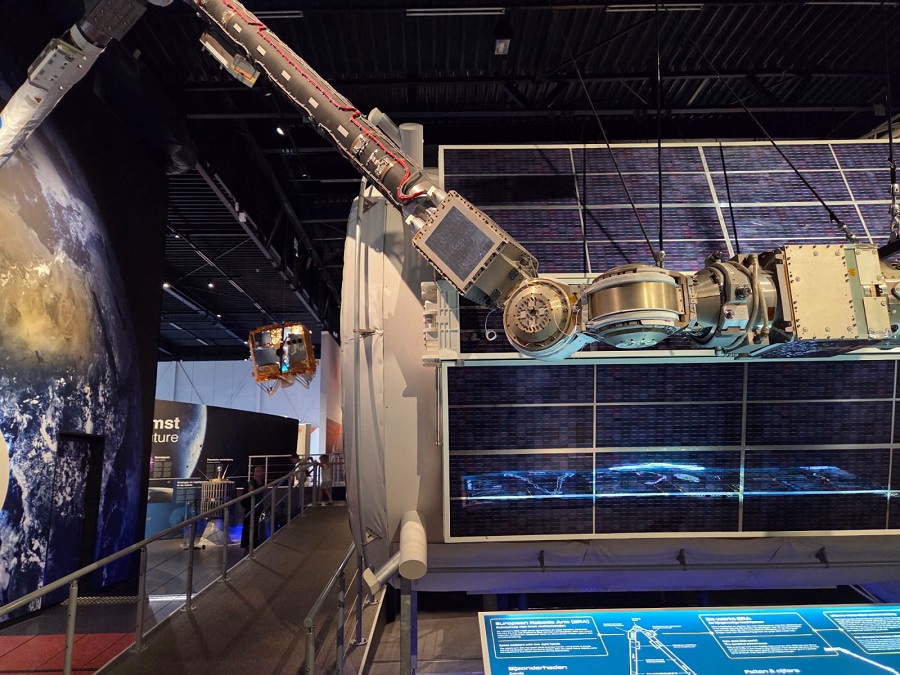
A replica of the infamous ERA in the dutch space museum
This remarkable robotic arm showcases how Dutch innovation continues to contribute to international space exploration and future missions beyond Earth.